
The global artificial intelligence (AI) boom has significantly reshaped equity markets, with Taiwan surpassing India to become the world's fifth-largest stock market. India has seen its market capitalisation decline by 7% year-to-date, while AI-linked economies like Taiwan and South Korea have surged.

The combined market valuation of four of India's top-10 most valued firms, including State Bank of India, Bharti Airtel, Tata Consultancy Services, and Larsen & Toubro, eroded by Rs 1 lakh crore last week amidst a volatile and range-bound equity market.

India's mutual fund industry has significantly increased its share of public trading in the stock market, widening its lead over the Life Insurance Corporation of India (LIC) for the fifth consecutive year. While LIC's share of free-float listed shares has fallen to 7.42% as of March 2026, the mutual fund industry's share has surged to 22.92% from 7.06% in 2012.

The list of companies in terms of market capitalisation has ONGC at the top with a market cap of Rs 145,615.97 crore (Rs 1456.15 billion), followed by Reliance Industries at Rs 106,547.77 crore (Rs 1065.47 billion).

'India has initiated a bear market and we will still go lower. It has nothing to do with the economy.'

India's five publicly listed Real Estate Investment Trusts (REITs) collectively distributed more than Rs 2,566 crore to over 425,000 unitholders in Q4FY26, with a cumulative distribution exceeding Rs 8,900 crore for the full fiscal year.

India's top 16 IT services companies distributed a record 1.3 trillion to shareholders in FY26 through dividends and share buybacks, a 36.3 per cent increase from FY25, even as the industry grappled with AI-driven business model threats and a significant decline in market capitalisation.

Companies in the fast-moving consumer goods (FMCG) sector are losing favour with equity investors, with their price-to-earnings (P/E) ratio declining to its lowest level in six years, now trading at 38.8 times trailing earnings.
India is set to witness a 'significant' growth in its market capitalisation during the next five years because of combination of a host of factors

All three Bharti group companies outperformed in CY25 but the biggest gain came from Bharti Airtel, the flagship.

The technology startup ecosystem in India attracted $7.2 billion in funding during the first half of calendar year 2026, marking a 12 per cent year-on-year (Y-o-Y) increase. However, even as funding increased, deal count fell sharply, according to a report by market intelligence platform Tracxn.
The demerger of Vedanta's four new entities - Vedanta Aluminium Metal, Vedanta Oil & Gas, Vedanta Power, and Vedanta Iron & Steel - has led to a 16% appreciation in aggregated market capitalisation, with Vedanta Aluminium Metal identified as a likely near-term top performer due to its scale, low production costs, and favourable commodities cycle.

Indian investors have seen their wealth erode by a staggering Rs 16.77 lakh crore over four trading sessions, as the markets faced deep losses driven by elevated crude oil prices, geopolitical tensions, persistent foreign fund outflows, and a record-low rupee.

Indian defence stocks have seen an average year-on-year gain of 67 per cent, driven by renewed interest following 'Operation Sindoor' and a broader increase in global geopolitical tensions, with the combined market capitalisation of 18 firms increasing by approximately 2.3 trillion.

Torrent Pharma has emerged as a top sectoral pick for brokerages, driven by healthy growth in India revenues and improved gross margins, leading to a 44 per cent stock return over the past year.

With momentum building around the IPO, the NSE saw a surge in retail investors in the last two years, making it one of the widely traded stocks in the unlisted market.

rediffGURU Ulhas Joshi answers your mutual fund queries.
Mcap of top 6 most valued firms drops nearly Rs 65k cr; Airtel biggest laggard

Eight of India's top-10 most valued firms saw their combined market valuation increase by Rs 1,87,497.45 crore last week, with Bharti Airtel emerging as the largest gainer, reflecting a positive trend in the equities market.

Indian paint majors, including Asian Paints, Berger Paints, and Kansai Nerolac, reported better-than-expected performance in Q4FY26, driven by steady demand, improved product mix, and strategic price hikes. The sector is also benefiting from reduced competitive intensity as new players also increase prices, narrowing the gap with incumbents.

Earlier, most investors counted on traditional options like fixed deposits, gold, or property. But in 2026, you will have access to a much wider range of opportunities across different markets and sectors.
India has lost its $5 trillion market capitalisation (mcap) tag following Monday's sharp selloff in equities and a simultaneous slide in the rupee.

IPL chairman Arun Dhumal supports Cricket Australia's decision to host a Big Bash League opener in Chennai, highlighting India's significance as the world's largest cricket market and its role in the sport's global expansion, especially with cricket's inclusion in the Olympics.

Indian startup funding plummeted by 43 per cent year-on-year to $7.81 billion between March 1 and June 15, 2026, largely due to the West Asia conflict, which has amplified global risk perceptions, tightened liquidity, and led to rupee depreciation, making global investors cautious.

Karan Adani of Adani Ports & Special Economic Zone emerged as the top absolute value creator, adding Rs 2.67 trillion as the company's mcap rose from Rs 42,149 crore in March 2020 to Rs 3.09 trillion in March 2026 (7.3x) -- the largest rupee addition on the list.

Infosys co-founder Nandan Nilekani stated that artificial intelligence will amplify, not replace, IT firms, projecting a massive USD 400 billion AI-first services opportunity by 2030. Addressing shareholders, he highlighted Infosys's readiness to help clients navigate enterprise AI complexities and capitalise on the structural shift in technology.

Shares of electric vehicle (EV) maker Ola Electric Mobility fell nearly 7 per cent to a fresh low on Monday after its revenue growth in the third quarter (October-December/Q3) of 2025-26 (FY26) slowed, with analysts warning that any turnaround could be prolonged.

Commodity trading on MCX is quite different from trading equities on the NSE or BSE. During the June-July period, the commodity market players in India will encounter several commodity contract expiries.

State-owned enterprises in India are projected to significantly increase their overseas borrowings, potentially exceeding $15 billion in FY27, driven by the Reserve Bank of India's new concessional forex swap facility which offers a 3 per cent funding-cost advantage.

India and the United States have reviewed progress on a proposed interim bilateral trade agreement, discussing market access, digital trade, and non-tariff barriers, as they race to finalise a deal before a temporary 10 per cent US tariff regime expires on July 24.
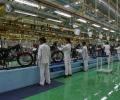
TVS Motor Company, on Wednesday, overtook Hero MotoCorp in terms of market value to become the sixth-largest automobile company on market capitalisation. he former's m-cap now stands at Rs 51,681 crore to the latter's Rs 50,951 crore. Bajaj Auto, with Rs 104,872 crore, is the only two-wheeler manufacturer in the top five. Shares of TVS have rallied 73 per cent this year while shares of Bajaj and Hero have risen only 3 per cent and 10 per cent, respectively. While sales, net profit and market share of TVS are lower than that of Bajaj and Hero, there are multiple triggers for the company.

Holoflex Ltd, a leading anti-counterfeiting and security solutions provider, plans to invest Rs 30 crore over the next two years to establish a second manufacturing facility. This expansion is driven by increasing demand for integrated brand protection solutions and growing concerns over counterfeit products across various sectors, including essential goods. The company aims to significantly boost its revenue and strengthen its position in the rapidly growing anti-counterfeiting market.

Kiran Mazumdar-Shaw names niece Claire Mazumdar as successor at Biocon. Explore the leadership transition, strategy, and future plans.

Indian equity investors experienced a significant loss of 16.32 lakh crore due to a two-day stock market decline fueled by escalating geopolitical tensions involving the US, Israel, and Iran.

The asymmetry in deposit and credit growth is the biggest challenge before the Indian banking industry. For every 100 deposit that a bank mobilises, it needs to keep 3 with the banking regulator in the form of cash reserve ratio on which it doesn't earn any interest. Another 18 is used for buying government bonds (statutory liquidity ratio). This means, a bank is left with 79 for giving credit. Add to this, its capital which can be used for giving loans. Most banks are facing a fund crunch. They need to find ways to attract deposits if they want to sustain credit growth, explains Tamal Bandyopadhyay.

'We are targeting a 2.5x to 3x increase in valuation by FY31.'

Mukesh Ambani, Asia's second richest man, has not drawn a salary from Reliance Industries for the sixth consecutive year, with dividends from his extensive shareholdings serving as his primary source of income.
